
I attended Vladimir Gerasichev’s “Context” training. I first heard about it from Yuri Belonoshchenko and Vladimir Voloshin, they mentioned it during their talks at Skolkovo. The training offers a clear, solid take on what results, responsibility, choice, and feedback really mean.

Format
The training runs for three days straight from 10 AM to 8 PM. The first two days were led by Mikhail Moskotin, who was energetic, intense and funny. Maybe he had this mindset to lead “better” than the creator of the training. Whatever it was, it worked. Mikhail was really inspiring. The third day was with Vladimir Gerasichev and it had a much calmer vibe.
Mikhail put the goal of the training into words like this: learn to accept other points of view and clearly show the other person that you understand them. He suggests approaching the material with a learning mindset, asking yourself, “What if this is true?” Here’s some truth:
Interpretation
The training suggests dividing the whole world into what’s “important” and what’s “not important.” Important things are those that actually show up in real life. Unimportant things are those that don’t produce real-world results. Example: if we agreed to meet at 10:00 and I showed up on time, that means the meeting was important to me. If I really want abs but keep eating fries late at night, abs aren’t important to me – fries are. You can easily check what’s important or not by looking at your real-life results.
Everything you have today comes directly from the viewpoints you hold. Everything you don’t have is also because of your viewpoints. The idea behind “Context” is that you can always choose another viewpoint and change how you see a situation.
You always win the game you’re playing. So, if your interpretation of the world is that everyone around you is an idiot, you might move to another country. But all those idiots will move with you.
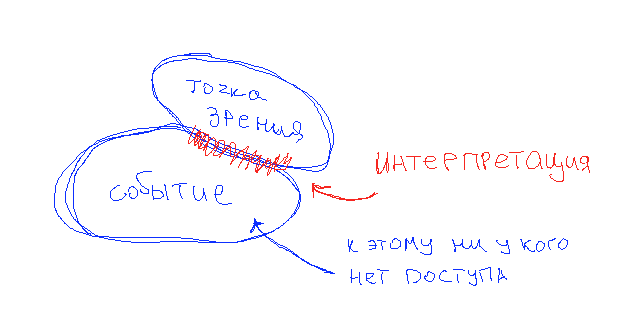
No one has direct access to a “non-interpreted event.” I interpret an event through my own experience. And if I choose to view the event from a certain angle, chances are I’m getting some kind of benefit from seeing things that way.
Wishing something has nothing to do with action or results. I might say I want to learn to ride a motorcycle or earn a million dollars, but if it’s not actually happening, it means I don’t really care, it’s just not important enough.
If I don’t like my current job or I’m unhappy about my relationship with my parents, it means I get something out of that viewpoint. Even if I change the scenery and switch jobs, I’ll probably still feel unhappy. Enthusiasm and interest are something I can choose. If I’m excited to work in IT, I can also choose to feel excited about digging potatoes. I’m responsible for choosing how I feel about what I do.
What I “want” doesn’t actually connect with what I do. Action and desire aren’t tied together. I can choose to do something if it’s important enough to me. There’s a simple way to check this:
you want ≠ you don’t do
you want ≠ you do
you don’t want ≠ you don’t do
you don’t want ≠ you do
This whole idea of “I just don’t want it badly enough” is nothing. It simply means it’s not important enough to me.
Responsibility
There are two positions I can take in life: victim or author. A victim is someone who believes that external forces or other people control their outcomes. Victims blame their results on competitors, emotions, childhood, traffic, weather, circumstances, horoscopes, solar storms or even illness. An author believes everything depends on them, that they’re stronger than their circumstances. And it’s completely my choice which role to take.
Victims feel comfortable with other victims because they reinforce each other’s excuses. They’re uncomfortable being around authors, it’s just too challenging.
When I do something, I’m the author. When I’m stuck thinking, I’m a victim.
Real conversations only happen when both sides take responsibility. Otherwise, conversations turn into explaining why something didn’t happen instead of achieving results. A great example: if I have results, I just show them – no explanation needed. But if I don’t have results, I start gathering analytics and detailed explanations. If the result isn’t there, clearly it wasn’t important to me.
Saying “the goal itself doesn’t inspire me” shifts responsibility onto the goal. Or when someone says “I’m looking for my life’s purpose”, it’s like waiting around for luck. They’re hoping someday they’ll fully express themselves when they finally find the perfect thing. Or the excuse: “leaders are born, not made.” All these examples illustrate a victim’s mindset, it’s comfortable because there’s no risk involved, no real action required and it allows people to complain about circumstances controlling their lives.
What if there’s no such thing as the “right” or “wrong” goal, but instead, I just make excuses for not reaching it?
In every moment, I’m fully expressing myself, just like a sparkler burning brightly. I can’t express myself better now than a second ago. If I’m still looking for my life’s calling, searching is clearly important to me, not actually doing it. Every choice has a benefit and a cost. For example, the benefit of “searching for my life’s calling” is avoiding mistakes, staying comfortable and never having to take responsibility. The price is wasting time, not moving toward goals and failing to push my team forward. When going after a new goal, I could enjoy the thrill, but the thrill comes at the price of risk.
People work with me based on whether I keep my word. First, if I am ready to take responsibility. Second, if I deliver on my promises. Do I typically act as an author or a victim? When do I start blaming external factors for my failures? I’m smart enough to always find excuses, but if I approach like this, results clearly aren’t important to me. I know this because in reality, I don’t have them.
Choice
When a person keeps searching for something they’ll enjoy doing, they’re acting like a tourist in life, saying, “Show me what you’ve got and I’ll pick something I like.” There’s a great video of Mikhail Moskotin explaining this concept in detail.
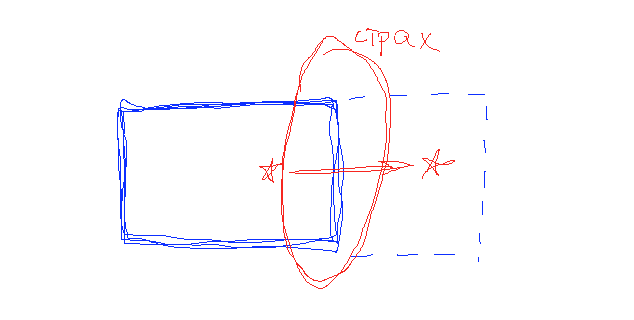
In reality, it’s impossible to know if you’ll truly like a future goal or not, because you haven’t been there yet (unless it’s a goal you’ve already achieved before). What if you think about a goal without relying on your past experience? Face the future directly instead of backing into it.
If you visualize this, choosing based on past experience just makes your existing frame thicker. Instead, you could expand your frame.
Without a goal, you have no control. It’s like shooting an arrow randomly and then running over afterward to draw a target around wherever it lands, saying, “Yep, that’s exactly what I was aiming for!” Convenient, no responsibility required. With this approach, you might say “why not?”, but you’re just moving chaotically. Right or wrong isn’t motivating, having a clear goal is.
When you’re feeling down or discouraged, ask yourself “What’s my goal?” This shifts your mindset away from feeling sorry for yourself and toward focusing on your future and present.
A healthy path: I want→ I declare it’s important → I actually do it / I get results. An unhealthy one: I want→ I declare it’s important → I don’t do, I waste all my energy convincing people and myself how much I truly want it, even though reality proves otherwise. How do I know it’s not important? Just look at reality. The scary part is how easily I can convince myself to live comfortably in scenario number two.
Feedback
Feedback is neutral information about how I’m showing up, designed to help me achieve my goal. Some behaviors help me reach the goal, I should keep doing those. Other behaviors need adjusting if I want to reach the goal faster.
When receiving feedback, I usually sort it into two boxes: “good” and “bad.” For everything that lands in the “bad” box, I often create elaborate excuses explaining why I didn’t do it differently. By doing this, I’m the one labeling feedback as good or bad. I end up chasing approval rather than focusing on the real goal I wanted feedback on.
If I get offended by someone’s feedback, I gain a hidden benefit, I don’t have to change anything. I get to be right and the person giving feedback “just doesn’t get it,” despite my efforts. This is a convenient way to avoid responsibility and still look good.
Conclusion: Move forward.