
In February 2022 I wrote a post about how smart trackers hand out advice and take no responsibility for it. I finished it with a promise: “I have a rough guess where the solution may lie. I will later share my thoughts on this theme.” More than three years have gone by, so it is time to pay that debt. In 2025 I started digging much harder into the principles you can build your own longevity on.
The answer came together as a chain: a WHOOP on my wrist, a nutritionist, 800 euros of blood work, 13 different supplements and two glucose sensors on my arm. Below — what it cost, what it showed, and why this is worth understanding now.
Medicine Has Changed the Question It Answers Three Times
The first medicine was empirical: chamomile calms you down, so we drink chamomile. The second one treats disease: a symptom → a pill. That is the medicine we grew up with. The third one is prevention: how to live so that you do not fall ill. Its clearest example is the culture of sport.
Every time, it came down to culture and norms, and norms change slowly — over generations. That is why the main job of the bands and the rings is teaching: you gradually work out what to watch, what can be measured at all, and how to stretch out the active years while shortening the frail stretch at the end. Do not expect secret knowledge or surprise diagnoses from them.
Why WHOOP Will Never Tell You to See a Cardiologist
Neither a band nor a ring counts as a medical device. That is why you never hear “you have this, do that about it”. One person follows the advice, dies, and the court cases kill the company. But the data is still there — the company can see it and cannot say it out loud.
Each of them invents its own way around that — how to give advice and still not take responsibility for it. In the 2022 post I went through three of those ways. What interests me more now is a different question: which of them builds a new habit into you fastest.
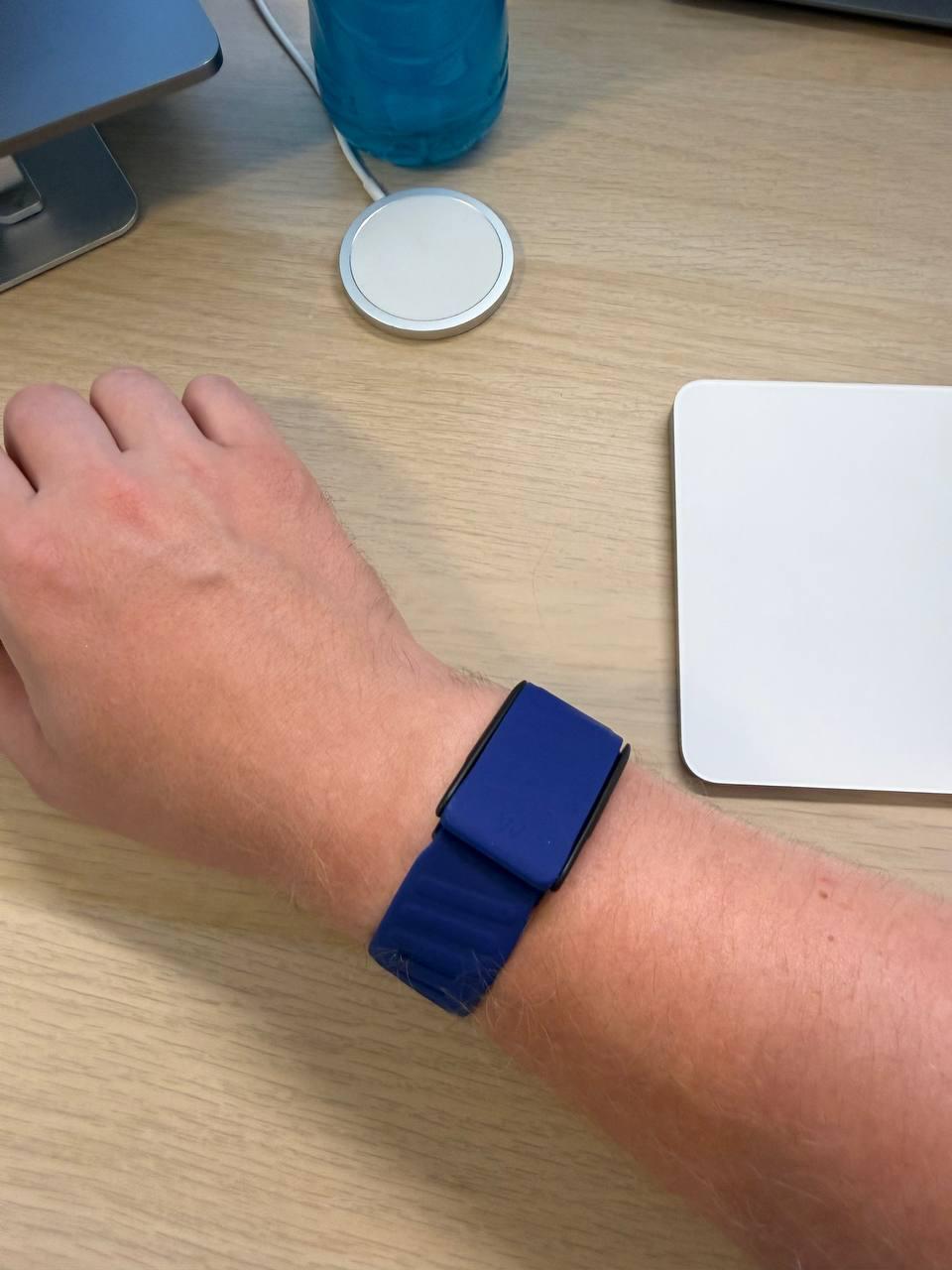
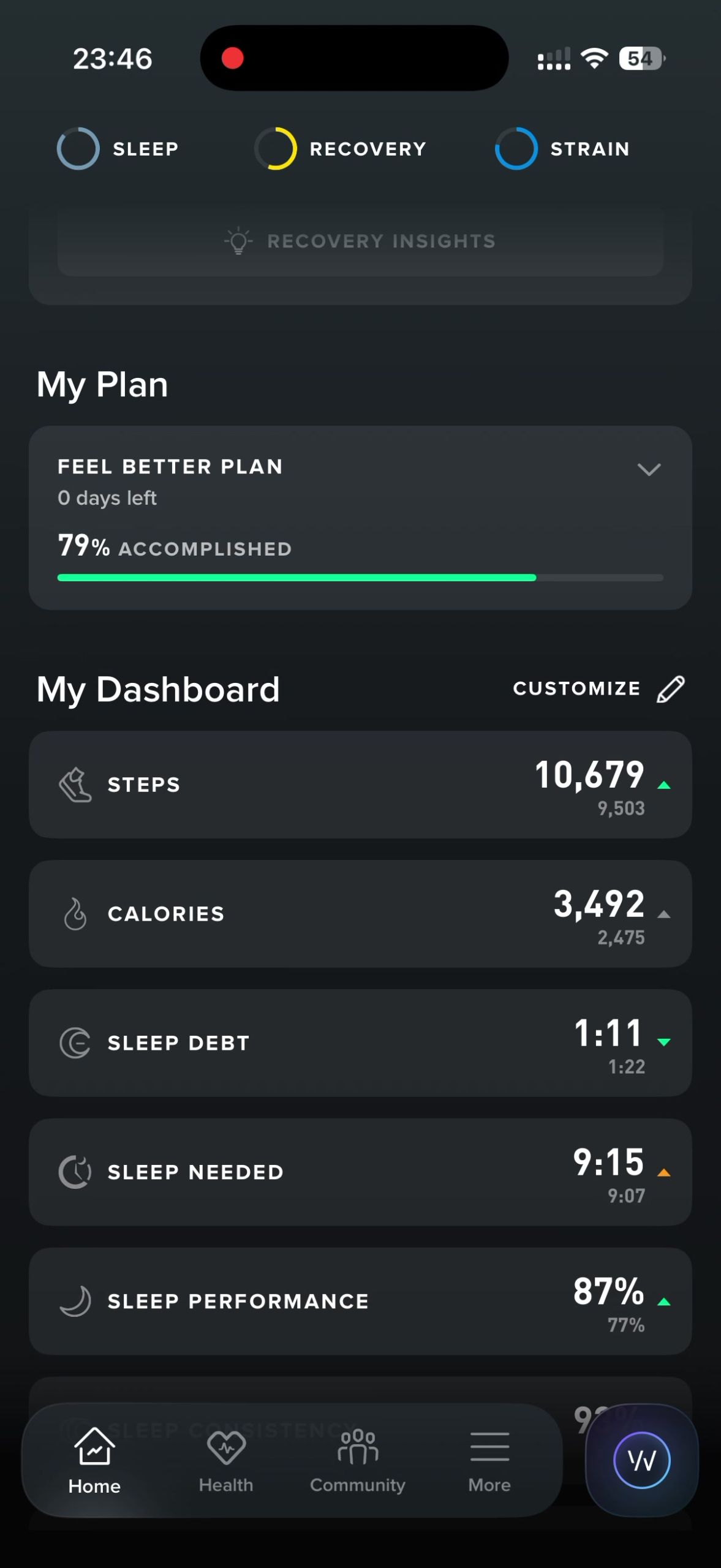
WHOOP positions itself as a longevity device. Inside there is a metric called Health Span: it compares your physical age with the age on your passport and recalculates every week. The concept behind it is real, but the number is the company’s own — how exactly it is calculated they do not disclose, so you cannot check it. On me the mechanics worked: I started doing strength training now and then, because otherwise WHOOP does not award the points. Which I am paying for.
Rings solve the same contradiction differently. They mostly talk about sleep scores, while strength work and cycling come out worse — with a ring on it is uncomfortable to hold the handlebar. Some people’s fingers also swell overnight; rings do not suit everyone. My wife wears an Ultrahuman ring and likes it. I wear the WHOOP: it measures heart activity more often and is already testing blood pressure, though that feature is still experimental.
So it is not about the sensors — they are roughly the same everywhere. It is about the mechanics a company invented around them, and which of those mechanics fits you personally. Every device invents an indicator of its own — a score, an index, a “physical age”. That is the channel the advice travels down: there is something that looks like a recommendation, and if the new lifestyle backfires, there is nobody to hold to account.
A Nutritionist for 250 Euros and 800 Euros of Blood Work
Now comes the part you can put on yourself today.
A nutritionist finds out who in your family was ill with what and what bothers you, looks through your old test results and hands you a list of new ones — a long one. In Cyprus that list cost 800 euros. In Armenia the same panel cost me four times less.
My wife and I both turned up something we had no idea about — low lithium, for example. Day to day it seems to change nothing; over the long run it will. Off the back of that I built a protocol that brought my lithium up.
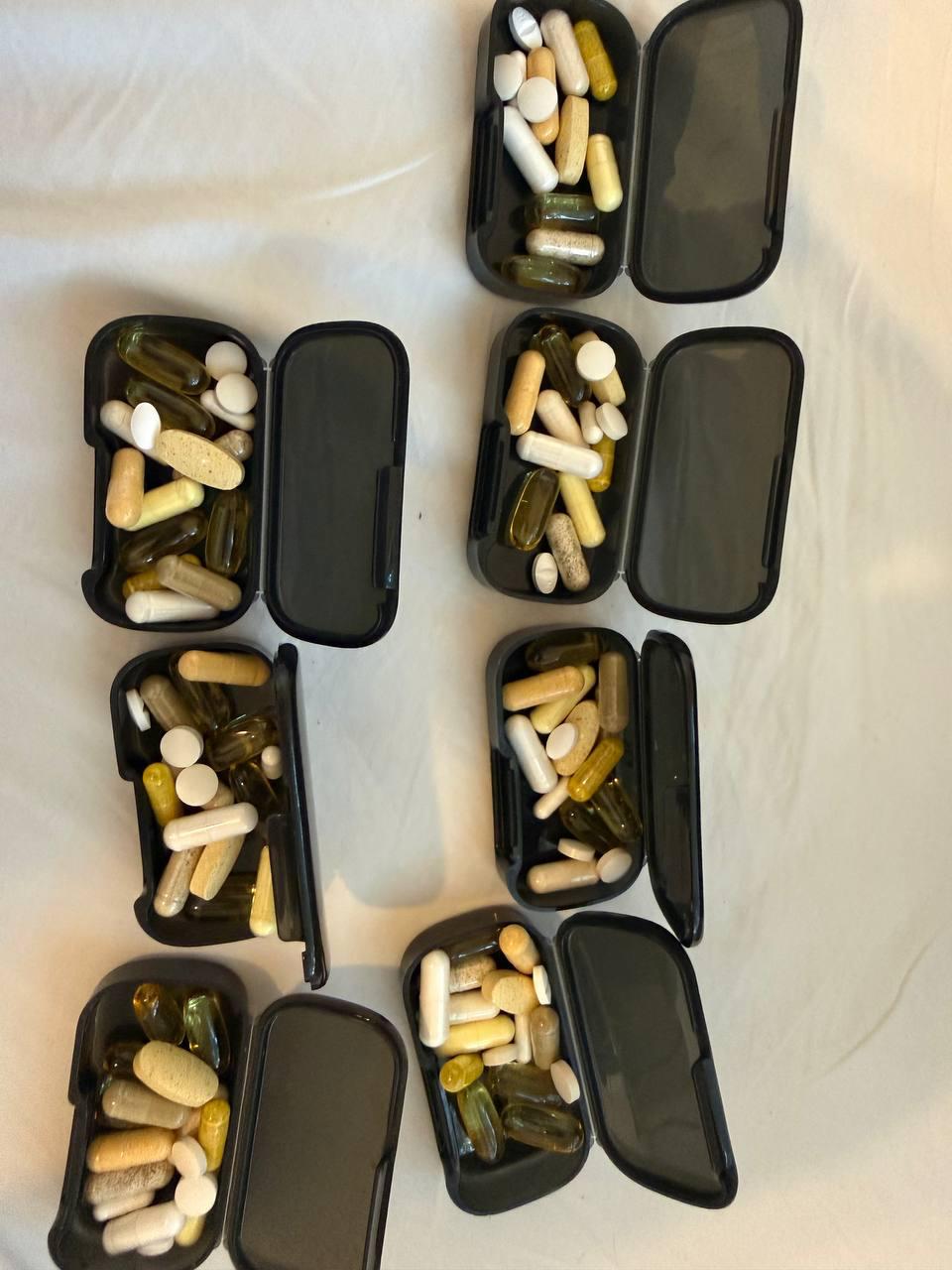
The scheme from there is this: you take the supplements, retest three months later and look at what shifted. In parallel, once the direction is clear, you can go to the doctors of classical medicine. And if some prescription looks unnecessary or harmful to you, take it to a doctor before you drop it.
Out of that work she put together a navigator file in Notion for me — I follow it: which tests, which supplements, what comes after what. A month later there was an hour-and-a-half call: a deeper reading of the results and suggestions on what to change in my habits, mostly in food.
Before that I was sure every nutritionist was a grifter on the level of business coaches. I met mine through a recommendation, and that is the only reason I made it to the first session. Her name is Alena, the work costs 250 euros — I can recommend her.
A Glucose Sensor: 200 Euros a Month, and the Two I Stopped At
Vitamins and supplements are fine, but food is still one of the main factors, and that is where the second layer of work starts. You send the nutritionist photos of what you eat, and in parallel she goes through the basics on fibre, protein and carbohydrates. The basics were useful to me.
We all react to food differently. Even the order in which the ingredients travel from the plate into your mouth matters. You can check that on yourself with a glucose sensor.
I bought a Libre 3 on Amazon: two sensors for a month — 200 euros, each one runs for 14 days. The sensor just sticks onto your upper arm. There is no needle in it; what stays under the skin is a thin “tail” like fishing line.
There are two generations:
- Libre 2 — to take a reading you hold your phone up to it, the data goes over NFC.
- Libre 3 — sends the data over Bluetooth by itself, in real time.
Most of the companies working with glucose right now use those same Libres: they brand them and write an app that only works with their own sensors. That is what Ultrahuman does — theirs is a Libre 2, 189 euros for two sensors. Plenty of third-party apps connect to the unbranded sensors; they work slightly differently, but they all look at one thing: how far your glucose jumps after you eat something. A nutritionist can also connect to your sensor and advise remotely.
I used two sensors and I am not buying more. I do not have diabetes, and over those four weeks I saw my own patterns of reaction to different foods.
Viome: A Test for How the Body Reacts to Food, and the Questions Around It
There is a way in from the other side — the Viome test. It looks at the gut, the saliva and the blood, and not only at which microbes are there but at what they are doing, and out of the results it offers personal nutrition recommendations. Viome is one of the most visible companies in this vertical in the US.
The scientific community has questions about the approach itself. I keep in mind that what we are talking about is a cultural paradigm: washing your hands before surgery raised questions for years too.
What to Read and Watch About Medicine 3.0
One of the popularisers of Medicine 3.0 is Peter Attia. He treated cancer patients and is strong in mathematics, and he wrote the book so that it can be read — “Outlive: The Science and Art of Longevity”. I listened to the audio version, which he reads himself, and that is the one I recommend.
There is also the Limitless series on Disney+ — Attia turns up in it. And the film “Hack Your Health: The Secrets of Your Gut” on Netflix, about the gut.
Starting with the book is easier: Attia explains the principles of longevity as a whole, and after it you understand why the rest of the steps in this post are needed at all. He boils almost all mortality after fifty down to the “The Four Horsemen of the Apocalypse” — cardiovascular disease, cancer, neurodegeneration and metabolic disease led by type 2 diabetes — and then shows how to work with each of those risks.
Three Devices That Stuck in Daily Life
These I use myself:
- Scales — Withings Body Comp — besides the weight they show body composition (fat, muscle, water, bone) and cardiovascular metrics.
- A blood pressure monitor — BPM Core — the readings go to the cloud and into the app, so the history builds itself.
- Earplugs for sleep, Loop — comfortable to sleep in on your side, and there are versions for concerts. I often take them travelling to be sure I sleep in silence.
The three of them cover body composition, blood pressure and keeping an eye on sleep.
Where to Start If You Want to Try
If I were assembling this path again, the order would be:
- Get a band or a ring and just wear it for a month, changing nothing in your life. There is one task at this stage — get used to looking at your sleep and your load.
- Find a nutritionist through a recommendation to do the blood work. The work is 250 euros, the tests are 200 to 800 euros depending on the country.
- Buy two glucose sensors for a month at 200 euros, work out your own reactions to food, and stop there if you do not have diabetes.
- Everything else is by interest and budget: a microbiome test, scales with body composition, a blood pressure monitor.
The takeaway: the sensors and the devices in all of this are there to set a new norm — to live in a way that keeps you active longer in old age. The technology for it is getting cheaper and reaching all of us.
I invite you along on this journey. If you have already worn something off the list, write to me about what stayed on your wrist and what you took off after a month — I am curious where my experience overlaps with yours.