
What’s the social contract and how does it help a person discover true freedom? What does someone give up by signing on? Why does a person need others? What does a well-functioning state look like, and who are the key players in it?
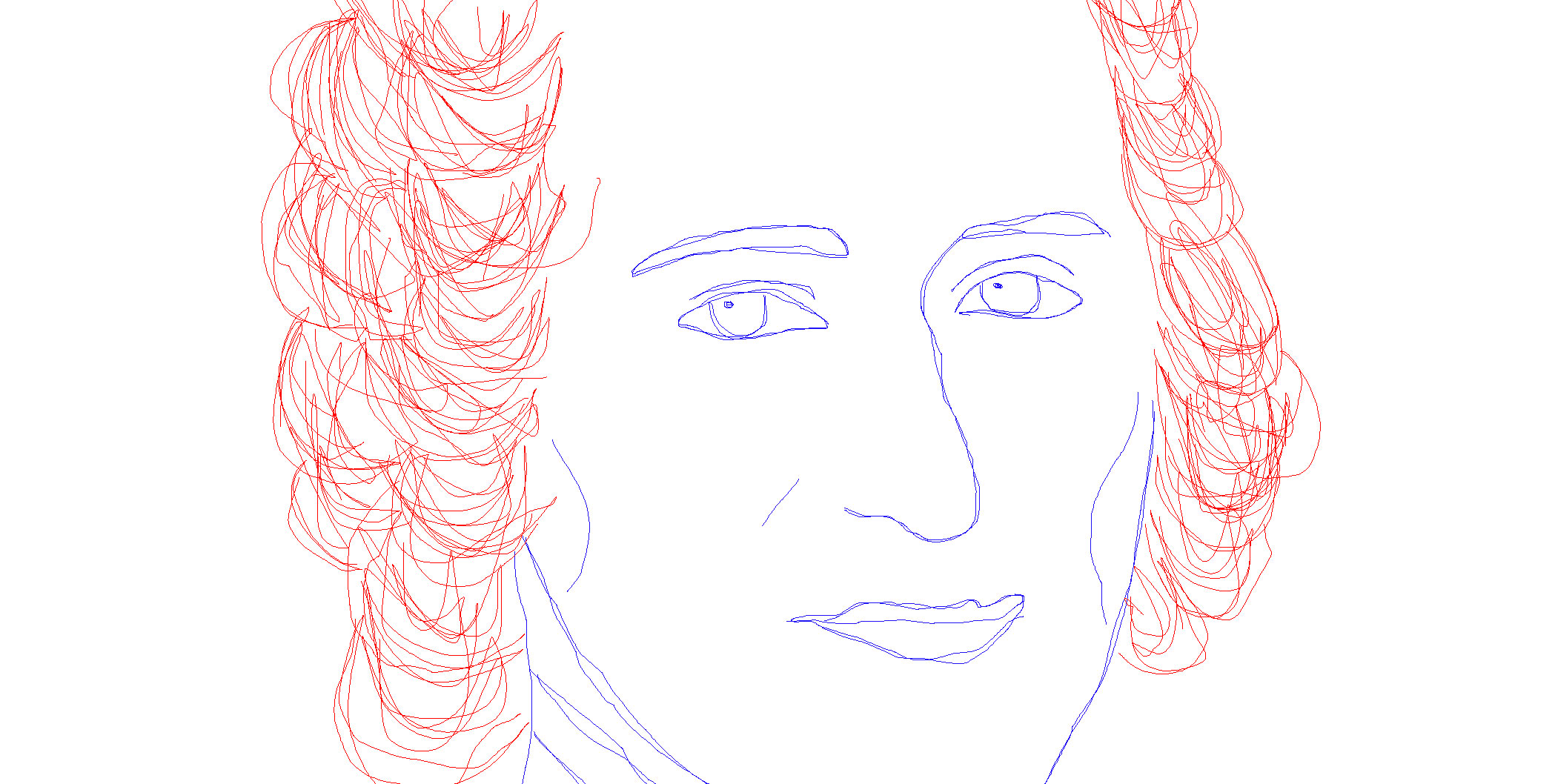
Biography
Rousseau was born in Geneva in 1712 and died near Paris in 1778. His father was a watchmaker, but his mother died in childbirth, so an uncle and aunt brought him up. Dad passed on a love of reading. From ten to twelve he lived with a priest, where he picked up Latin and studied Scripture. At sixteen he set off to wander and, over the next sixteen years, tried on lots of jobs: private tutor, footman, secretary, while reading and diving into music theory. He fell for Madame de Warens, an older and better-educated woman who left a deep mark on him, teaching him to write and speak in the polished language of high society.
Of all the jobs he tried, music mattered most to him. He even wrote an opera that was staged in Paris and the king of France offered him a pension for it. Rousseau refused because he believed in democracy. In the end, he made his living by copying sheet music.
After moving to Paris, he got to know the city’s elite and built relationships with them. Later, he fell out with them. Rousseau was a hard person to deal with as he argued with everyone.
Rousseau’s work falls into three periods.
1. Early period. In 1749 he entered an essay contest run by the French Academy of Sciences: “Has the revival of science and the arts improved morals?” He set nature against civilization and said that staying close to nature keeps our behavior genuine.
Most thinkers then believed the Enlightenment made people better, but Rousseau argued that science and art only corrupt us and pull us away from happiness.
His other key text from this era, Discourse on the Origin of Inequality (1755), insists that inequality is man-made, born with private property.
2. Middle period (1756–1762). Rousseau left Paris for the countryside and there wrote The Social Contract. The French Parliament promptly banned it. We’ll dig into that book next.
3. Late period (1762–1778). Hounded for his ideas, Rousseau fled to Switzerland, then England and finally slipped back into France in 1768. During these years he grew convinced he was being persecuted and saw conspiracies everywhere. Even so, he managed to publish a music dictionary and wrote an operatic melodrama.
In his works, Rousseau reflects on nature and on how our perception grows. He argues that this growth should first and foremost cultivate feelings of compassion and mercy.
Rousseau’s ideas had a strong pull on later figures in history and culture. Mussolini, for instance, leaned on Rousseau’s distorted belief that people should get back to nature, while cities drive them toward vice. Tolstoy idolized Rousseau. And the only portrait that hung in Kant’s study was of Rousseau.
Contents
People aren’t enemies to each other in their natural state. Their relationships stay peaceful, because war breaks out only over property.
People team up to survive, they enter a social contract when the upside of living together beats the risk of going it alone. When people band together, they save more than their lives, they keep their freedom, too. They trade natural freedom for civil freedom, the kind that’s protected by laws. When you’re on your own, freedom is fragile as the strong can snatch whatever they want. The social contract locks that freedom in place. Now it’s not just you defending it, the whole power of society has your back. With the social contract, you don’t give anything up, you only gain.
There are two kinds of unity: association and aggregation. Aggregations are communities kept together by force, they’re false forms of unity. Associations are communities of the true sovereign, revealed when a common will appears. When people enter the social contract, they hand over all their rights. Because everyone gives up their will completely, equality comes into being at the same moment. The general will of the people was later picked up by the fascists, but they twisted it, claiming that unity is set by the party.
Anyone in modern society is caught between defending the state and hanging on to their property and life. As citizens, we’re told to volunteer for war, but as people we know: “the dead own nothing.”
For Rousseau, the sovereign is made up of its citizens. Anyone who hasn’t entered the social contract and hasn’t become a citizen is a foreigner. Property begins with land, so sovereignty has to be tied to a specific territory. The constitution is the sovereign’s manifestation.
No state can exist without a government. The government’s main job is to carry out the people’s will. That gives the state three key actors: the sovereign, the people and the government. What sets the government apart from the sovereign is that the government is bound by law. The sovereign, in turn, makes the laws.
Rousseau says sovereignty can be carried out in three ways: monarchy, democracy and aristocracy. He also draws a line between strong and weak governments. A strong government follows the sovereign’s will and to do that it has to stay small, leaving no room to twist the sovereign’s laws or slip in personal interests.
Political art is the skill of spotting what truly carries weight and what doesn’t, what’s only formal and what’s substantive. Rousseau draws a line between law and political law. Political law is what you get when people act not by the written code but by who’s influential, handing out penalties to match. When political law takes over from regular law, it signals a weak government that can’t do its main job.
There are two sides to sovereignty. First is the sovereign’s direct power, the right to make laws. Second is the sovereign handing some of that power to the government. Monarchy works better for large states, because as the government grows, there’s more room for different readings of the laws.
For mid-size states, Rousseau says aristocracy works best, because its leaders are chosen. Elections clear the way for the most capable people.
Democracy works best in small countries because you can bring everyone together. In Rome, for instance, about 400,000 citizens could meet and serve as the sovereign. The form of government people choose depends not just on territory, but also on their habit of obeying the law, their education, how their work is organized and their consumption habits.
The sovereign’s decrees are sacred – above every other law. When the state is born, each person is born again as a citizen once the social contract takes effect. From then, Rousseau sees religion as a political tool, a way to legitimize authority and train people for civic life.
Rousseau identifies four kinds of religion:
- Personal religion: rituals, ceremonies, baptism.
- Polytheism: each nation has its own god, because each nation has its own sovereignty.
- Pantheon religion: Rome is the model: believe in whomever you want, just obey the law.
- Christianity, which Rousseau sees as the worst for a sovereign. A Christian’s true homeland is in heaven, so winning or losing a battle hardly matters – keeping the covenant does. A Christian ends up either an enemy of the state or a citizen who does his duty half-heartedly. To save the nation, Rousseau says, Christianity must first be scrapped. For any Christian, the spirit comes first and the real homeland is above.
Selected quotes
According to Rousseau, Russians will never become truly civilized. Here’s how he explains it:
Russians will never be genuinely civilized because civilization reached them too soon. Peter had a talent for copying others but lacked real genius, the kind that creates something out of nothing. Some of what he did was good, most of it missed the mark. He saw his people were rough, but he didn’t understand that they weren’t ready for the rules of civil society. He tried to enlighten and improve them all at once, when they still needed time to get used to its demands. He set out to turn them into Germans and Englishmen before first making them Russians. By convincing his subjects they already were what they weren’t, he kept them from ever becoming what they could be.
Even in wartime, a just ruler may seize what belongs to the enemy nation as a whole, yet still respect private citizens and their property. He upholds the same rights on which his own authority rests.
On the Social Contract: when each person hands himself over to the whole community, he isn’t surrendering to any single individual. Because every member gets the same rights over everyone else that they grant in return, each person wins back the equivalent of what he gives up and gains extra power to protect what he keeps. In the social contract, you give up your natural freedom, the limitless right to grab whatever tempts you, but you gain civil freedom and the legal right to everything you own.
Alongside the benefits a person gains in the civil state, we can add moral freedom – the one thing that makes you truly your own master. Living by mere impulse is slavery, living by a law you set for yourself is freedom.
The original agreement doesn’t wipe out natural equality, instead, it replaces the physical inequalities nature gave us with equality as persons and equality before the law. People may differ in strength or talent, but through the agreement and by right – they all become equals.
About tyrants
Tyrants always create or choose times of chaos – moments when society is gripped by fear, to push through harmful laws that people would never accept during calmer days. Picking that exact moment to make their move is one of the clearest signs that separates the work of a real lawmaker from the actions of a dictator.
Their personal goal is always to keep the people weak, suffering and unable to resist. Sure, if you imagine the citizens staying completely obedient forever, then the ruler would actually benefit from having a powerful nation, because that strength, being his own, would make him intimidating to neighbors.
In the end, despotism doesn’t rule to make people happy, it ruins them just to keep them under control.
The moment someone starts saying “Why should I care?” about what’s happening in their country, you can be sure that country is dead.
About sovereignty and Christianity
Since the Social Contract makes all citizens equal, everyone gets to have a say in what everyone else should do, but nobody can ask someone else to do something they wouldn’t do themselves. It’s exactly this right, crucial for giving life and energy to the political body, that the sovereign grants to the ruler when setting up the government.
Christianity teaches nothing but slavery and submission. Its spirit is so perfect for tyranny that tyrants can’t help but take advantage of it. True Christians are made to be slaves, they already know it and it barely bothers them. To them, this short life just isn’t worth much.