I built Biz-cen.ru , an office-rental proptech, and Lashoestring.com, a UK antiques e-commerce. I run a Telegram channel, in Russian. For contact — email. Writing from Berlin.

ENРУ
Later Ctrl + ↑

Baruch Spinoza’s “Theological-Political Treatise”

How our modern scientific worldview sprouted from Scripture. The government’s core mission. Why religion and politics need to stay in separate lanes. Why it’s crucial to know the world an author lived in before you dive into their work. How to actually read the Bible.
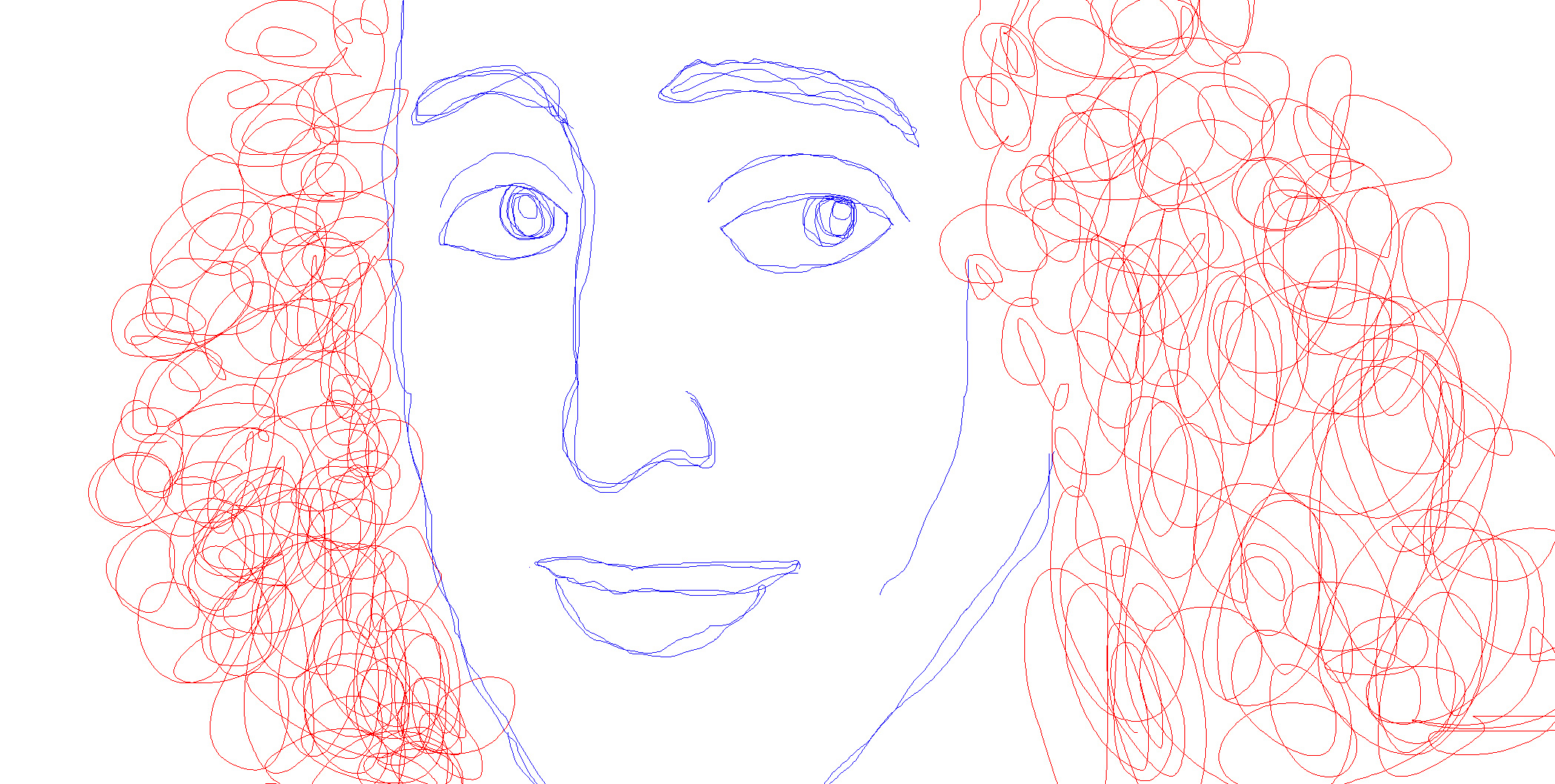
Hand-drawn line portrait of a man with long curly hair, evoking Spinoza

Social context.

The Treatise’s core goal is to split theology from politics and rein in religion’s sway over public life.

In 1665, Johan de Witt, an influential statesman who championed the interests of the merchant-industrial bourgeoisie, invited Spinoza to write a new text. Spinoza put aside work on his major book Ethics to take on the project. He spent the next five years writing and in 1670 the book was released anonymously.

Back then, the Netherlands had only recently won its freedom from Spain. Spirits were high and the government backed religious tolerance. That atmosphere pulled in plenty of thinkers, including René Descartes.

The Netherlands was a political battleground at the time. On one side, you had the merchant and industrial elite led by Johan de Witt. On the other, the Stadtholder faction driven by religious ideology and in charge of the military. And just to make things even messier, there was also a war going on with England. De Witt, worried the Stadtholders might gain too much power, kept military funding on a tight leash.

Johan de Witt had a clear goal when he commissioned Spinoza’s work – to weaken the power of the Stadtholders by dialing down religion’s grip on politics. Spinoza believed that letting religious doctrine guide the government wasn’t good for society as a whole. In his writing, he ran with that idea and laid out arguments that still shape how modern states are built today.

But in the end, Johan de Witt lost the political battle. He was brutally murdered, burned alive. As for the book, even though it was published anonymously, people quickly connected it to Spinoza and it was promptly banned.

God = Nature = Reason = Science

In the first part of his treatise, Spinoza challenges the idea of the Bible as a reliable source of knowledge. He argued that to truly understand Scripture, you need to know the context in which it was written: Jewish history, rhetoric, linguistics to grasp the real meaning behind the words and metaphors and natural science to tell the difference between actual miracles and natural phenomena.

The treatise was written to explore the relationship between democracy and religion and it marked the beginning of the Radical Enlightenment. Everything that came before it was more like enlightened conservatism.

Spinoza didn’t see nature as just matter, he also meant the laws of substance or God, the infinite being. In his view, God’s power is natural and inseparable from the workings of nature itself. That means nature’s power is both divine and infinite. And that’s where he draws a powerful connection: God = Nature = Reason = Science.

Human beings are part of nature. It’s important to distinguish between the general laws of nature and what’s unique to human nature. Spinoza points to one core human right – the right to preserve oneself. And for that purpose, he says, it’s fair to use whatever means are available.

To survive, people need each other. That’s why communities form, by coming together, they amplify their strength. Reason shows itself in our ability to build that collective power while still living in peace.

In the first part of the treatise, Spinoza argues that miracles don’t exist, what we call miracles are just the opinions of prophets. Religion and divine revelations have nothing to do with nature or truth. To Spinoza, the Bible is basically the core ideological text of the old regime.

Spinoza saw the Bible as a tool for keeping people in line, something made for the general public, who don’t have a strong sense of rational morality. It works by stirring up the imagination and emotions, using fear and promises to leave a strong impression and set the rules for the crowd.

How the rise of science was already written into Scripture

The Jewish state was a theocracy, where divine law and civil law matched. Spinoza believed divine law entered Scripture through revelation and that God created the conditions that allowed the Jewish state to emerge. and that God created the conditions that allowed the Jewish state to emerge. But here’s the interesting twist: in that same sense, any nation can be seen as “chosen,” just like the Jews, because the right conditions also came together for other nations to form.

In the Jewish state civil law turns into religious duty, making the entire nation function like a monastic order. Even everyday actions, like milking a cow, take on a religious meaning.

Spinoza believed that a theocratic state built on theology sees “others” as enemies of God, simply because they worship different gods. In his view, the Jewish state was the most unnatural form of government on earth. By relying so much on religion to hold it together, the state ends up weakening itself.

Theocracy is dangerous because it is closed for different opinions or new ideas. Different interpretations of sacred texts open the door to speculation and internal conflict, which often leads to civil war. To get past that kind of mess, Spinoza says we need science. It gives us a more stable and reliable way to build a society.

According to Spinoza, Scripture came into being as a natural part of Jewish history. The Jewish people were once enslaved by the Egyptians, an external force that controlled them. God might feel like “one of us,” but in a theocracy, he still ends up acting like a ruler. When religion runs the government, it creates a deep conflict inside society, a struggle between belief and freedom. Spinoza says the only way to fix that is through science and reason. That’s what helps humanity grow and become what it’s truly capable of.

To prevent conflict in theocratic states, Spinoza suggests separating religion from government and protecting freedom of speech. The only opinion he thinks should be limited is the calls to ban freedom of speech. The state should be a tool for freedom, built on laws, strengthened through unity and designed to let reason shine.

Conclusion: It’s kind of amazing to realize that science and almost all modern ways of thinking actually grew out of a religious worldview. I used to think science gave us an independent, “objective” picture of the world, something that let us see the true nature of things.

Selected Quotes

On Prophets

Here’s how I’ll wrap it up: prophecy never made prophets any more knowledgeable. They stuck to their own biased views. So when it comes to abstract or speculative stuff, we’re under no obligation to believe them.

But there’s nothing blasphemous in what we’re saying as Solomon, Isaiah, Jesus and the rest may have been prophets, but they were still human. And like any human, it’s fair to assume that nothing truly human was foreign to them.

So, all of this clearly shows what we set out to prove: that God shaped revelations to fit the understanding and personal views of the prophets. Which means prophets might not have known things related to pure reason or abstract thinking. They even disagreed with each other on those topics. That’s why it’s simply wrong to look to the prophets for knowledge about nature or the deeper workings of the spirit.

On the calling of the Jews and whether prophecy was unique to them

True happiness and fulfillment come from wisdom and understanding the truth, not from being wiser than others or from others lacking that truth. That kind of comparison doesn’t add even the slightest bit to a person’s actual wisdom, which is where real happiness lies.

By “God’s guidance” (Dei directio), I mean the fixed and unchanging order of nature, the natural chain (concatenatio) of cause and effect. As we’ve said before, the universal laws of nature that govern and determine everything are nothing other than God’s eternal decrees. These contain eternal truth and necessity. So whether we say that things happen according to the laws of nature or by God’s will and direction, we’re really saying the same thing.

Everything we truly want in life basically comes down to three things: understanding the world through its first causes, gaining control over our emotions or developing a habit of virtue and finally, living a calm, peaceful life in good physical health.

On divine law

So, since a law is nothing more than a way of life that people set for themselves or others in order to reach a certain goal, I think it makes sense to divide law into two kinds: human and divine. By human law, I mean a way of living that’s meant to keep the state running and preserve social order. Divine law, on the other hand, is about something higher, reaching true knowledge of God and learning to love Him.

The more we understand the natural world, the greater and more complete our knowledge of God becomes. The deeper we explore nature, the more fully we come to know God’s true essence.

So, we conclude that God is described as a lawmaker or ruler only because of how the masses think and because of the limits of human understanding. In reality, God acts and governs everything solely out of the necessity of His own nature and perfection.

Why religious rituals were created and why we believe in stories from the past
Laws in any country should be designed in a way that motivates people not through fear, but through hope for something good that they deeply desire. That way, people are more likely to do their part willingly.

So, if something ever happened in nature that went against its universal laws, it would also go against reason and against the very nature of God. Anyone claiming that God breaks the laws of nature is basically saying God goes against His own nature. And honestly, nothing could be more absurd.

I’ve already shown that Scripture doesn’t explain things by looking at their direct causes. Instead, it tells stories in a way that’s most likely to inspire reverence, especially among the masses. That’s why it often speaks about God and other matters in very vague or imprecise terms. Its goal isn’t to convince the mind, but to move and captivate the imagination.

On interpreting Scripture

Scripture doesn’t define the things it talks about, just like nature doesn’t either.

If you’re reading a book filled with strange or hard-to-understand ideas and you don’t know who wrote it, when it was written or why – it’s pretty much impossible to figure out what it really means. Without that context, there’s no way to know what the author intended or could’ve meant. But once you do know those things, your thinking gets a lot clearer. You’re less likely to project your own assumptions onto the text and more likely to focus on what the author actually meant, what they were trying to say based on their time, their situation and their audience.

I honestly can’t get over how some people see such deep, hidden mysteries in Scripture that, supposedly, no human language could ever explain them. And then they go and stuff religion with so much philosophy that the church ends up looking more like a university lecture hall and faith starts to feel more like a science or worse, just endless debate.

Here’s the thing: if someone lives a good life, then even if they don’t agree with others on doctrine, they’re still a true believer. But if their actions are bad, then no matter how much they say the right things, they’re not really a believer at all.

Faith by itself, if it is not accompanied by action, is dead.

Like we said, reason belongs to the realm of truth and wisdom, while theology belongs to the realm of devotion and obedience.

Those who run the state always try to make even their shady actions look legit. They want the public to believe they acted fairly. And it’s pretty easy for them to pull that off when they control how the law is interpreted.

Back then, even just moving your homeland was seen as shameful, because worshiping God, which they were always obligated to do, was only allowed in their own land. That land alone was considered holy, any other place was seen as unclean and defiled.

“The Prince” by Machiavelli

A 16th-century guide to building an authoritarian state. The ideas still hold up today, you can easily draw parallels with modern Russia. The first part focuses on the state itself, while the second dives into thoughts on republics.

Hand-drawn line portrait of a man in profile with red hair and blue-outlined face.

Biography and Context

Machiavelli grew up in Florence and lived from 1498 to 1512. He was the son of a successful, however not particularly wealthy lawyer with plenty of influence and connections. His father was determined to give him the best education possible and even wrote in his diary: “I spent so much money on it, I’m scared to even write down the amount.”

Starting at age seven, Machiavelli studied Latin, but his education wasn’t classical. He didn’t know Greek, so he couldn’t read the works of Greek philosophers in the original Greek, even though The Prince draws clear parallels with Plato’s ideas. Machiavelli was well-educated, but he wasn’t a part of the intellectual elite.

In Machiavelli’s time, learning was starting to become independent from the Church and skilled workers were making a living through their craft. Society was shifting from a religious-centered worldview to a humanist one. In the religious view, God came first and people came second. Humanism flipped that – people came first. The main idea was that the world was made for humans, which the Bible also points out.

The humanist era celebrated what people could do. Humanism was based on the idea that all people are equal, that education matters and that being active and engaged is a key part of life. During Machiavelli’s lifetime, the “Neoplatonist school” took shape – a universal system of logic meant to explain how everything in the world worked.

Then Machiavelli became part of a republican intellectual club that included conspirators plotting against the Medici family, who had regained power in Florence. Some of the conspirators turned out to be Machiavelli’s former students, which led to him being sentenced to death. The Medici later granted him amnesty, but stripped him of all official positions.

The Prince was Machiavelli’s attempt to win back favor with the Medici court. What’s interesting, despite being a supporter of free thought, he wrote a guide on how to build and run an authoritarian state.

Overview

Below is not a word-for-word translation of the text, just a loose retelling of the parts I found interesting.

The state is what holds everything together.

  1. Power is what’s needed to keep everything organized. Some people take on that job, they’re the ones in charge of running things.
  2. But those people also need support. That support comes from authority and control.
  3. The most important part of holding power is reason. It’s a key part of what makes authority work.

When power stays the same for too long, there comes a point where extra resources are wasted just to keep the status quo. This hurts society, because those resources could’ve been used for other kinds of progress.

There are different types of states: inherited, new and mixed. As for the people, some are used to obeying, while others are free. A person becomes a ruler through a mix of boldness and luck.

For a ruler, it’s important to have boldness to achieve great things. That means recognizing the moment and acting in tune with the spirit of the times. Chance is the raw material and with willpower, it can turn into success. Understanding timing means knowing that yesterday was too early and tomorrow will be too late.

Boldness helps reveal the meaning behind events, but actions also need to be strong and decisive. Machiavelli gives an example of a ruler who first sent a tough official to bring order to a city using harsh methods. Once things were under control, the ruler had him cut in half and left his body in the town square. That way, the ruler kept peace and won the people’s support by getting rid of the man they hated.

Qualities like kindness or honesty in politics often end up being long-term mistakes.

Political toughness should look like personal goodness. Executions should inspire both fear and respect as if they were fair. And those in power need to keep up that appearance.

A politician has to be both a person and a beast (a fox and a lion). The lion can’t avoid traps and the fox can’t fight off wolves. That’s why you need to be a fox to spot the traps and a lion to scare off the wolves.

Machiavelli got a lot of ideas from Greek philosophy, but he didn’t mention his sources directly, probably to avoid revealing that he couldn’t read Greek. In one part he comes close to quoting Plato, who believed that all good judgment comes from knowledge. Knowledge means understanding the balance between pleasure and pain. Doing the right thing means knowing how to choose between what feels good and what hurts and picking the lesser pain when you have to. The Greeks called this ability Logos, which means word, reason and balance.

For example, if you’re in a battle and losing, what’s the better choice: to run away and go home or to die fighting? The lesser evil is to die on the battlefield, because if you run, you’ll be killed with shame anyway.

Immoral actions should be covered up with a show of morality in the moment, but in the long run they might actually turn out to be merciful. In the moment, the crowd is drawn to success. The masses don’t see long-term consequences.
And when the masses completely merge with the state, there’s no room for reflection, everything becomes part of the crowd and critical thinking disappears.

If the nobility sees itself as equal, you can offer new nobles new positions. That way, they’ll know you can take those privileges away and that gives you control over them.

Conclusion: It’s surprising how clearly and calmly Machiavelli explains how an authoritarian state is built. When you’re living in one, you keep hearing that “the state is for the people.” But really, it’s the other way around – the people are for the state. And that, for Machiavelli, is what real political strength looks like.

How do smart trackers fool us?

Every tracker on the market promises to improve something. Garmin is built around sport, Oura around sleep, Welltory around recovery. Between them they will count your cadence, your REM minutes and your resting heart rate to one decimal place.

Not one of them will tell you what to do about any of it tomorrow morning.

Hand-drawn bar chart with one tall bar marked 'Insight' by a red arrow
The whole industry sells you the tall bar on the right. What it ships is the rest of the chart.

The reason is not technical

Open the Garmin app and you can put your running cadence and your elevation gain on the same graph. Fine. Now what — which of the two do I change on Saturday, and by how much?

The data is there and the answer is not, and sensors have nothing to do with it. A wristband is not a certified medical device. The moment it says “that chest tightness is yesterday’s session, your numbers look normal, go back to sleep”, it is giving medical advice — and one morning it will be wrong, and the lawyers will arrive. So every one of these companies sits on the same contradiction: they hold the data that would support a real recommendation, and they cannot say it out loud.

What they do instead is work around it. I count three ways.

1. Show you the average and let you do the maths

Garmin tells me I got 3 hours 8 minutes of REM last night, and it tells me what the normal range is. Whether my 3 hours 8 minutes is a problem is left as an exercise for the reader.

Phone screen 'About REM Sleep' showing a 3h 8m total on a bar and tips for better REM sleep
Garmin on my REM sleep: a number, a normal range, and advice underneath that would fit anyone.

This is the cheapest workaround, and the most honest one. Nobody promised you a recommendation. You were handed a ruler and left to measure yourself.

2. Turn the advice into an article

The second way is to publish the recommendation as content, so that it counts as education rather than instruction. Write one piece on what short sleep does to the body and one on what long sleep does, then show the reader whichever one matches last night’s numbers.

Welltory does this well — the feed rearranges itself around your metrics, so it reads as though it were written for you this morning.

Phone app screen: a journaling 'baby step' tip above a running workout heart-rate graph and stats
Welltory: a tip at the top of the screen, my workout underneath it.

3. Invent a metric only the company can read

The third way is the most elegant of the three. Garmin’s Body Battery is a single number out of 100 that rises while you rest and falls while you train, while you are stressed, and after a bad night. Alcohol does not feed into it directly — it wrecks your heart rate variability overnight, and heart rate variability is what the number reads. Garmin’s own guidance is simple enough: a high number means you have the energy to train, a low one means it may be a good idea to rest.

Garmin app graph titled Today showing Body Battery rising then falling with Rest and Stress bars
My Body Battery across a single day. The number is reported to the unit, hour by hour, and there is no way to check it.

The formula behind it is not public, and that is not an oversight — it is the whole mechanism. A hidden number lets Garmin push you towards a better score without ever naming the thing you are supposed to fix. You get a direction and no instruction, which means there is nothing to hold anyone to afterwards.

Garmin does name the ingredients — heart rate variability, stress, sleep, activity. What it does not publish is the recipe: how much each one is worth. That gap is where the advice lives. The number tells you to go up. It never tells you which lever raises it, or by how much. You are left with a direction and no instruction, and a direction is not something anyone can be held to afterwards.

What it adds up to

None of the three is a personal recommendation, whatever the marketing calls it. The first hands you a ruler, the second hands you an article, the third hands you a score.

In the long run the winner will be whoever finds a way to give a real recommendation and survive giving it. I have a rough guess where the solution may lie. I will later share my thoughts on this theme.

What is your experience with smart trackers? Do they have any effect on your life?

What’s the difference between information, understanding and knowledge? And how the digital world changed the way we think about all that?

You could start from the idea that everything in the world is connected and everything affects everything. So when we try to really understand something, we have to look at it in a broader context.

But here’s another way to look at it. If we’re going to talk about a specific term, we need to define its boundaries clearly. Say “this is white and this is black.” Everyone joining the conversation should be on the same page about what we mean, so we’re not arguing about definitions, we’re agreeing on them first.

Let’s break down the difference between information, understanding and knowledge. Then we’ll look at how the digital age has changed what these words mean and how it’s reshaped the way we work and organize what we do.

Hand-drawn diagram arcing from information through understanding to knowledge over a communication line.

Definitions of information, understanding and knowledge. And how are they connected?

You can break down communication into three steps:
A. First comes the transfer of information, spoken or written. That’s the basic act of communication.
B. Then, the person receiving that information filters it through their own context. They start to form an understanding of how to act in a way that might lead to a positive outcome. This is where information becomes personal. That’s why you can tell a group of people the same thing and they’ll each walk away with a different takeaway, because they process it through their own lens.
C. Finally, the person takes action. They do something based on their understanding and the results of that action or lack of results turn into real knowledge. That’s the key: knowledge doesn’t exist without action. It’s something we gain through doing.

Hand-drawn sketch of stick-figure people grouped in circles and linked by arrows, a communication network.

Information is data about the world around us, passed along through communication.
Understanding is the meaning we personally assign to that information as we process it.
Knowledge is the experience we gain through action, it’s knowing what actually works in a specific situation.

How digital changed information and understanding?

On the information level:
The amount and speed of access to information have exploded. Now anyone can create and share it, since the cost of producing and distributing information has dropped dramatically.

On the understanding level:
Understanding often comes from information that’s structured like a clear, step-by-step guide. Digital tools have massively sped up how fast we can find those kinds of instructions. So now, thanks to tech, people can build understanding across way more areas than ever before.

Which means the number of areas where someone can start building their understanding has grown dramatically.

How digital changed knowledge?

On the knowledge level digital has brought the biggest changes. The important one is that we’ve started to lose the skill of acting in the unknown. These days, if there’s no step-by-step guide, people often just don’t know what to do.

Let’s take a look at how people worked with knowledge before the digital age:

There was a guy named John who lived in a village. He wanted to know how to grow a good potato harvest. His father passed down some knowledge like planting only the bigger potatoes. He also read in a book that you shouldn’t fertilize right before planting, but in the fall, after the previous harvest.
That was the extent of what John knew about planting. Those first two steps were within the bounds of what others had already figured out. He hit the limits of other people’s experience pretty quickly.

If John wanted to improve his potato harvest, he had to start experimenting. That meant stepping into the unknown. He had to figure things out for himself like what to do during a dry season or how to handle it when it rained nonstop.

Some of his ideas failed, others worked. And that’s how it used to go in the age of books, before the digital world took over. Gaining knowledge had two key features:

  1. Whatever area John decided to explore, he quickly picked up all the available knowledge within the “known” and hit the edge of the “unknown”.
  2. He often ended up in the “unknown” and had to figure things out by testing his own ideas.

With the invention of writing, the amount of information grew, people could finally store and pass down what they knew about the world. But it was digital technology that truly exploded the amount of information we have. That massively expanded the boundaries of the “known” world we live in. And that changed everything, now people can spend their whole lives staying within the “known” without ever needing to step into the “unknown”.

With digital you can spend your whole life learning a single field, even something like farming and still never reach the edge of the “known”. Most of the time you’re just following instructions, because it’s now so easy to find information that fits your exact situation.

To act in the “unknown” you need to be able to handle the emotional weight of trying things that don’t work out. But if you’re always following ready-made instructions, that kind of emotional resilience doesn’t develop. So stepping into the “unknown” feels not just unfamiliar, but uncomfortable too.

Conclusion: The skill of gaining new knowledge has weakened, because gaining new knowledge means testing hypotheses, some of which won’t lead to the best result. But thanks to easy access to information, people have gotten used to always following instructions that guarantee a positive outcome.

P.S. At the knowledge level, other important changes are happening too. Let’s list them without going into detail:

  1. To reach the edge of the “unknown”, where new knowledge can be created, now takes more time for an individual. That’s led to a rise in specialization.
  2. The value of easily repeatable knowledge has gone down, while the value of being able to synthesize knowledge has gone up.
  3. Competition between companies has become less about quantity and more about quality.

November 2021

This text was created as part of the work done by the “Digital” group. The group included Ruslan Akhtyamov and Evgeny Oshchepkov.

The main challenge of digital transformation

During my MBA, in the “Kamchatka Module” we dug into Georgy Shchedrovitsky’s framework called Organizational‑Managerial Thinking. To keep sharpening that mindset, we launched the K2 Club, made up mostly of fellow alumni.

Inside the club we’ve split into a handful of focus groups: power&energy, health, digital, public strategy and a few more. The setup is three or four off‑site sessions a year, each one three days of intense, collaborative work. At those meet‑ups, the method’s experts Andrey Evgenievich Volkov and Pavel Brunovich Mrdulyash guide us through the process. Between sessions, each group keeps working together regularly. Here’s a quick recap of what our “Digital” group has been working on.

Hand-drawn topographic contour map with concentric red lines and K2 marked at the summit.

Defining “digital”

To define what we mean by “digital,” we’re starting with the ideas of language and writing. Language is a way to communicate through gestures, sounds or speech. It came long before writing and helped people connect within small groups. But language only worked in the moment, in the context of a situation. Language opened the door to new ways of organizing and working together. It transformed how people lived and interacted, it was a turning point for society.

The next big shift came with the invention of writing. The biggest change it brought was the ability to store knowledge. Writing made it possible to pass down information and shape culture in a whole new way, it laid the foundation for civilization. Knowledge could be capitalized, built up and shared across time and space. Writing broke the limits of the moment. It let people communicate outside of a specific situation or context. Information started moving faster, more widely and more densely. Writing changed how society was organized and opened the door to entirely new kinds of activity. It was another major transformation.

The role of digital in transformation

We believe that the rise of digital marks the next big transformation. What’s new this time is the arrival of a new player in communication – IT systems. Communication is no longer tied to physical media. It happens instantly, across any distance. When language first appeared, people usually had to be physically present to communicate. With writing, they could share knowledge through books. Now, with digital, we don’t need physical carriers at all. The density, speed and reach of communication have increased dramatically.

To show that IT systems are now active participants in communication, take this example: two route planners are discussing the best route for a cargo ship. They refer to the system that analyzes weather patterns and get recommendations on the optimal path. The fact that a system can now offer that kind of input has once again transformed how we operate as a society.

Hand-drawn diagram comparing language, writing and digital communication with stick figures and notes.

Whether it’s writing or digital, the goal of communication has always been the same – to share meaning. The speed, density, reach and number of actors involved in communication shape two key things:

  1. What kinds of activities are possible;
  2. What forms of organization can exist to support those activities.
    We call a combination of these two things an activity model.

We call it a transformation when a new way of communicating leads to entirely new activity models. Digital technology has marked one of those turning points in society.

Hand-drawn diagram of digital-transformation levels, showing a gap, activity models and a digital framework.

Problem framing

We place the idea of “digital” on the third level, the same level as religion, mythology and meaning. It’s a core concept, something foundational. The activity models it creates belong to the first level, the level of real-world projects. In between, on the second level, is culture. It connects deep ideas with everyday actions.

We also apply a digital transformation framework to this model. On the first level we find digital assets, digital models and digital organization. On the second level is digital culture – the focus of our studying.
We believe that digital technology led to new activity models and they’ve spread rapidly across all areas of life. But cultural change is happening much more slowly. That’s where we see the problem: the way we work has changed, but the culture to support this new way of working hasn’t fully formed. There’s a gap.

Our goal is to develop a method for transforming digital culture that can help bridge this gap.

July 2021.

The group also included: Ruslan Akhtyamov, Evgeny Oshchepkov, Sergey Chernobaev and Mikhail Milyokhin.

Earlier Ctrl + ↓